What Do the Numbers on Your Glasses Mean? A Frame Size Guide
Eye size, bridge, temple: what the three numbers inside your glasses arm mean, how to read them, and how to use them to find frames that fit. From Melbourne.
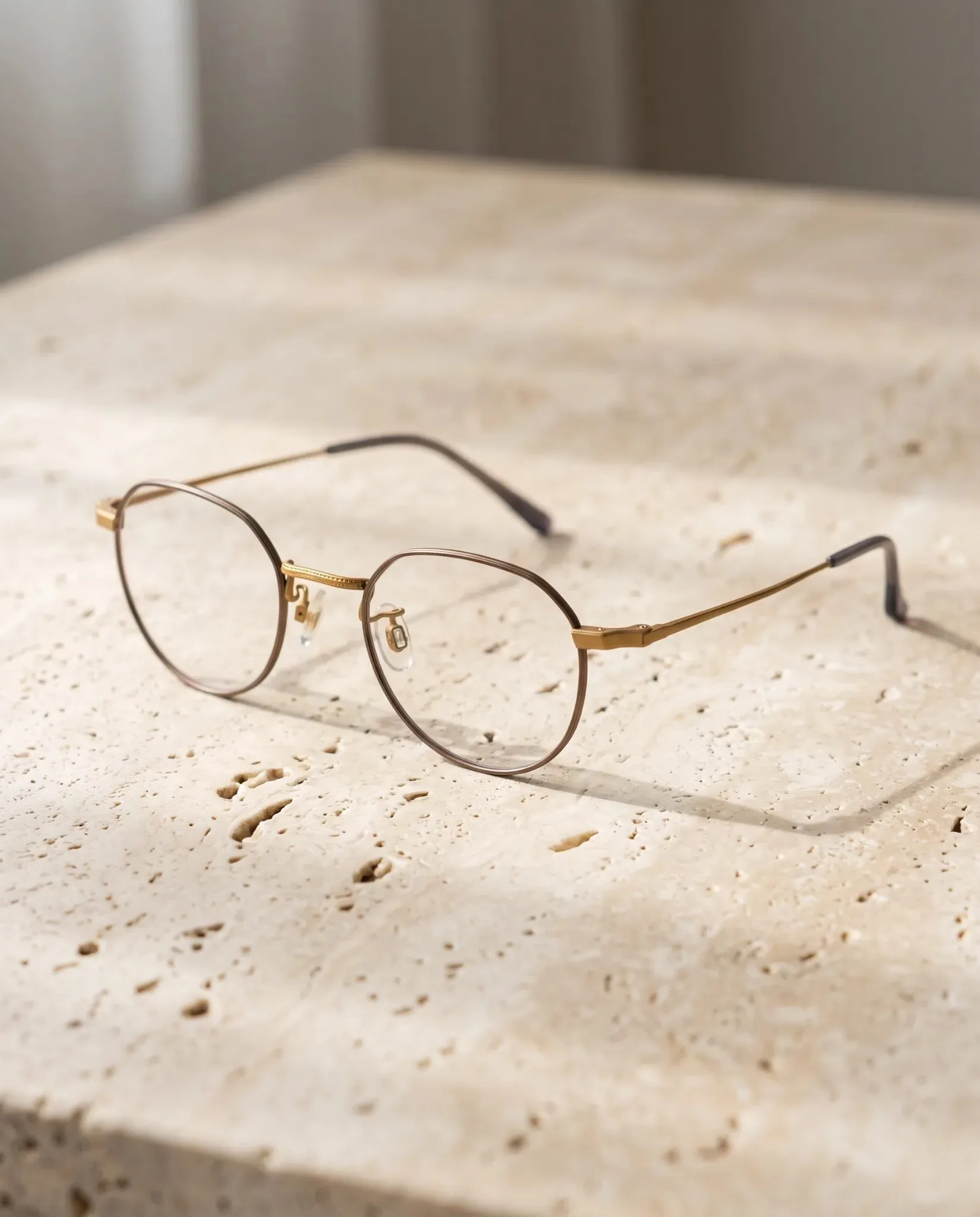
Turn your current glasses over and look along the inside of the arm. Somewhere near the hinge there is a short line of numbers, something like 52□18-148. Most people never notice them, yet those three figures are the most useful information you have when choosing your next pair. At RYAN ADDA, designing frames in Melbourne, Australia, we list these measurements on every product page, because a frame that fits well is one you forget you are wearing.
Why Frame Measurements Matter
Two frames can look almost identical in a photo and still fit completely differently. A few millimetres at the bridge decides whether a frame rests on your nose or slides down it. A few millimetres in lens width decides whether your eyes sit centred in the lenses or crowd towards the edges. Knowing your numbers turns frame shopping from guesswork into a short list.
Where to Find the Numbers
On most frames the measurements are printed on the inside of the left temple arm. If they are not there, check behind the bridge or near the nose pads. Alongside the three size figures you will usually see a model name and a colour code. On a RYAN ADDA frame that is the frame name, such as ME PARIS, and a colourway code, such as C2.
The Three Numbers, Explained
All three numbers are in millimetres, and they always appear in the same order.

1. Eye Size (Lens Width)
The first and largest number is the horizontal width of one lens. Across most optical frames it falls somewhere between 40 and 60 mm. In our own catalogue it runs from 46 mm on the ME NEW YORK, a deliberately compact titanium frame, to 56 mm on the FLIGHT CONTROL. Sunglasses run larger again: our OO YOLO has a 65 mm lens.
Eye size is the number that does the most to set a frame's overall scale. As a rough guide, a smaller face or narrower head usually looks balanced in a smaller eye size, and a broader face in a larger one.
2. Bridge Width
The second number, often separated from the first by a small square, is the gap between the two lenses: the part of the frame that sits on your nose. A smaller bridge suits a narrower nose and a larger bridge a wider one.
This is the number that most affects comfort. Too narrow, and the frame pinches and sits high. Too wide, and it slips down your nose all day. Across RYAN ADDA frames the bridge runs from 14 mm (ME MILAN) to 21 mm (ME NEW YORK, ME PARIS and several ONE frames). Where our frames have nose pads, they are made of silicone or titanium and are adjustable, so your optician can fine-tune how the frame sits.
3. Temple Length
The third number is the length of each arm, measured from the hinge to the tip that curves behind your ear. Temple lengths vary far less than the other two numbers. Ours sit between 140 and 150 mm, and an optician can adjust the bend behind the ear to suit you.
How to Read a Real Example
Take the FLIGHT DIRECTOR, one of our titanium-and-acetate optical frames. Its measurements read 52-18-148:
- 52 mm eye size: a medium lens width, the middle of the range for adult optical frames.
- 18 mm bridge: a mid-width bridge that suits most noses.
- 148 mm temple: a longer arm, at the upper end of our range.
Compare that with the ME NEW YORK at 46-21-142: a smaller lens, a wider bridge and a shorter arm. Both frames are designed in Melbourne, but they are built for different faces.
How to Find Your Own Size
The simplest way is to start from a pair you already own and love.
- Find the numbers on your favourite frame. If they have worn off, an optician can measure them in seconds.
- Use them as your baseline. Frames within 2 to 3 mm of your current eye size, and within 1 to 2 mm of your current bridge, will usually feel familiar.
- Prioritise the bridge. If a frame you love has a different bridge width from your current pair, try it on in person before committing.
- Check the style notes. Every RYAN ADDA product page lists a size guide (Narrow, Medium or Wide) next to the measurements, as a quick shortcut.
- Ask your optician. Pupillary distance, lens type and prescription strength also affect which frame sizes will work best for you, and a qualified optician will factor all of them in.
Measurements Are a Starting Point, Not the Final Word
Numbers narrow the field, but fit is personal. Face shape, cheekbone height and how a frame's weight is balanced all play a part. This is why we partner with independent optical stockists who can adjust your frame and dispense your prescription properly.
When you are ready, browse the full RYAN ADDA collection at https://ryanadda.com/shop. Every frame lists its eye, bridge and temple measurements, so you can compare them against your own before you visit a stockist near you.
FAQ
Is the first number on my glasses my prescription?
No. The numbers on the frame describe the frame's size in millimetres. Your prescription is a separate set of figures written by your optometrist and has nothing to do with the frame measurements.
What is a normal glasses size?
There is no single normal size. Across our own optical range, most frames have an eye size between 48 and 54 mm, a bridge between 17 and 21 mm and a temple between 140 and 145 mm. Even so, use your own best-fitting pair as your reference rather than an average.
Does a larger bridge number mean the frame is bigger?
Not overall. The bridge only measures the gap between the lenses. A frame can have a small eye size and a wide bridge, like the ME NEW YORK at 46-21-142, which suits a narrower face with a wider nose bridge.
Can an optician change the size of my frame?
An optician can adjust temple bends and nose pads for a better fit, but cannot change the eye size or bridge width. Choose those two numbers carefully and leave the fine-tuning to your optician.