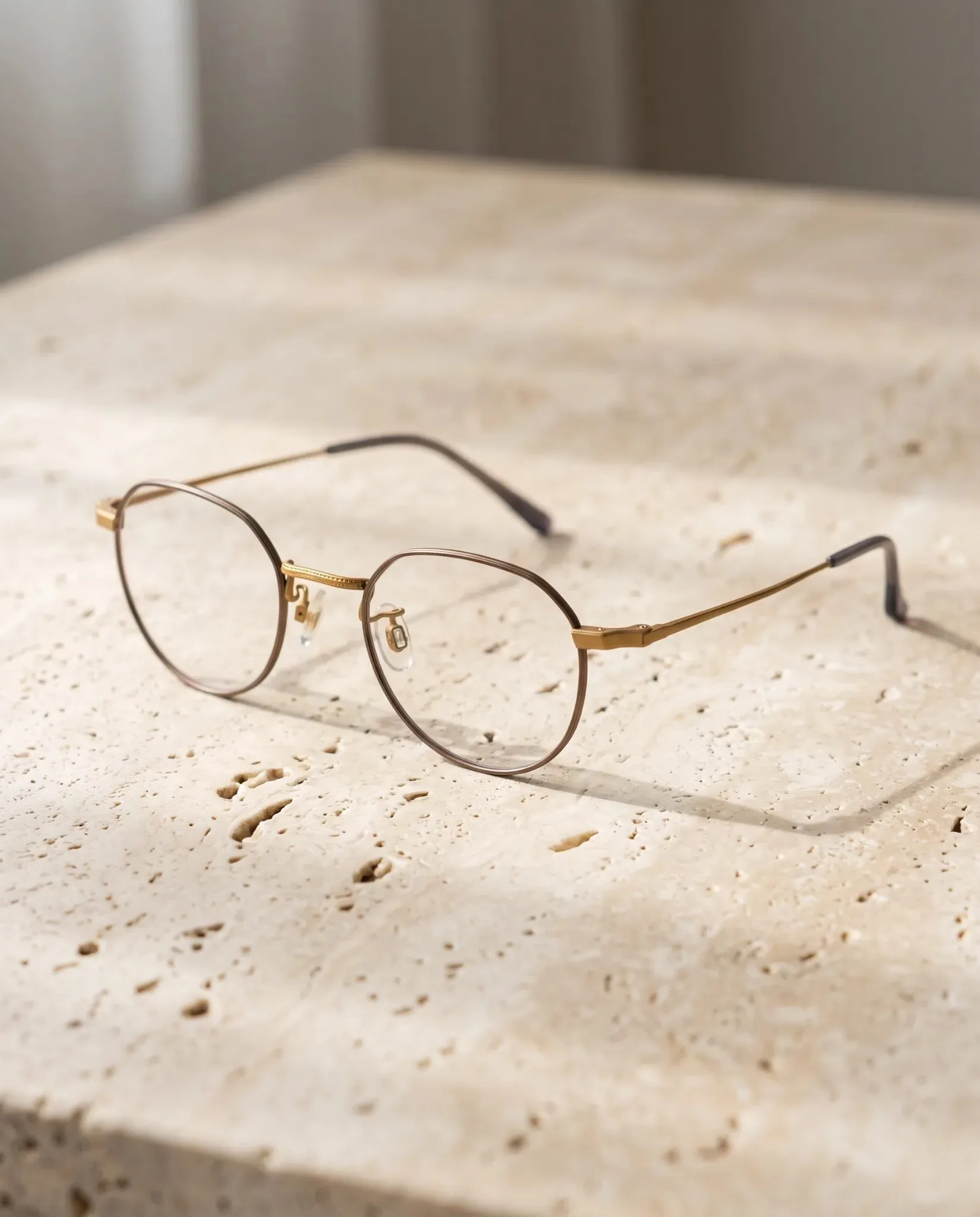
Glasses for Nickel Allergy: How to Choose Hypoallergenic Frames
Itchy nose or red skin behind the ears from your glasses? How nickel allergy affects frames, why pure titanium helps, and what to check before you buy.

If your skin itches, reddens or flakes where your glasses touch it, on the bridge of your nose or behind your ears, your frame may be the cause. Nickel is one of the most common causes of allergic contact dermatitis, and it is often present in metal glasses frames. The good news is that the right frame material can take the problem away. At RYAN ADDA, from our studio in Melbourne, Australia, this is one of the questions we are asked most, so here is what to look for.
Why Glasses Can Trigger Nickel Allergy
Glasses are worn for hours every day, in direct contact with the skin, often in warmth and humidity. Sweat can draw small amounts of nickel out of a metal frame and into the skin, and for someone who is sensitised, that is enough to set off a reaction.
Symptoms usually appear exactly where the frame touches:
- On the bridge of the nose, under the nose pads.
- Behind the ears, where the temple tips rest.
- Along the brow or cheeks, if the frame sits against them.
The rash can be itchy, red, dry or blistered, and it often returns soon after you put your glasses back on.
A note before we go further: this guide is general information, not medical advice. If you have a rash that will not settle, see your GP or a dermatologist. A patch test is the reliable way to confirm a nickel allergy, or to find out whether something else is the cause.
Why Pure Titanium Is the Go-To Choice
Pure titanium is the material most often recommended for people with a nickel allergy, for good reason:
- No nickel: Pure titanium and beta-titanium contain no traces of nickel or other contaminants.
- Biocompatible: Titanium is widely used in medicine because the body tolerates it so well.
- Corrosion resistant: It does not break down in contact with sweat, which keeps your skin and your frame in good condition.
- Light and comfortable: Less weight means less pressure on the nose and behind the ears, the very places reactions appear.
A Word of Caution About "Titanium" Labels
Not every frame described as titanium is pure titanium. Some titanium alloys, including certain memory alloys, contain a significant proportion of nickel. If you are allergic, ask whether a frame is pure titanium or beta-titanium, not just "titanium".
Check Every Part That Touches Your Skin
A frame can be made of a skin-friendly material and still have a component that is not. Before you buy, check:
- Nose pads and pad arms: The small metal arms that hold the pads are a common hidden source of nickel. Silicone or titanium pads on titanium arms avoid this.
- Temple tips: These sit behind your ears all day. Acetate or titanium tips are a safe choice.
- Hinges and screws: Usually these sit away from the skin, but it is worth asking about them if your allergy is severe.
- Coatings: A painted or plated finish on an ordinary metal frame can wear through over time and expose the metal underneath.
Other Materials Worth Considering
Titanium is not the only option. Acetate, a plant-based material made from wood pulp or cotton, is widely recommended for metal-sensitive skin and offers far more colour than metal frames. Stainless steel alloys vary in their nickel content, so if you are considering a steel frame, ask your optician whether it is suitable for a nickel allergy.
How We Approach It at RYAN ADDA
Titanium is at the heart of much of the RYAN ADDA range. Our titanium is sourced from Japan, and our nickel-release certification under EN 16128:2015, the European reference test method for nickel release from spectacle frames and sunglasses, is published on our Learning pages.
If you have a nickel allergy, we recommend our titanium frames:
- The ME collection: every frame is crafted in titanium, from the compact ME NEW YORK and ME PARIS to the ME MELBOURNE and ME ZURICH.
- The ZEN collection: the ZEN DREAMER, ZEN SAGE and ZEN ALCHEMIST are all titanium.
- The titanium frames of the ONE collection: including the ONE CHERISH, ONE EDITION, ONE FAMILY, ONE VISION and ONE WISDOM. Our ONE collection also includes steel frames, so check the material on each product page.
Our titanium-and-acetate frames, including the FLIGHT collection, are another option. Talk to your optician about which parts of the frame will sit against your skin.
Finding the Right Pair
Living with a nickel allergy should not mean giving up on frames you love. Choose pure titanium or acetate, check the nose pads and temple tips, and ask questions before you buy. A good independent optician will be glad to help, and can adjust the frame so it sits comfortably without rubbing.
Explore our titanium frames at https://ryanadda.com/shop, where every product page lists the frame's material, and find a RYAN ADDA stockist near you to try them on. Designed in Melbourne, made to be worn all day.
FAQ
Are titanium glasses nickel free?
Pure titanium and beta-titanium frames are nickel free. Some titanium alloys contain nickel, so if you have an allergy, confirm that the frame is pure titanium or beta-titanium.
What is the best glasses material for sensitive skin?
Pure titanium and acetate are the two most widely recommended materials. Titanium suits people who want a light, minimal frame. Acetate suits people who want colour and a bolder shape.
Why do my glasses only irritate the skin behind my ears?
The temple tips sit against your skin all day, often where sweat collects. If your frame's tips are metal, or a coating has worn through, that is a likely cause. New acetate or titanium tips, or a new frame, can solve it.
Can I just coat my current frames with clear nail polish?
It may help for a short time, but coatings wear off with daily use. A frame made from a nickel-free material is a more lasting solution.